Profile of Work

February 20th, 2008

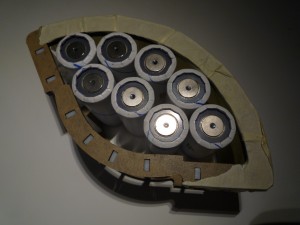
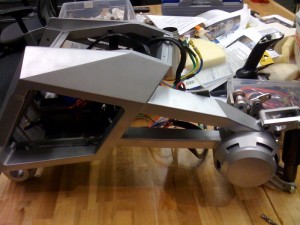
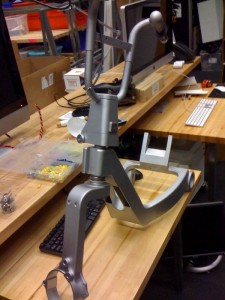
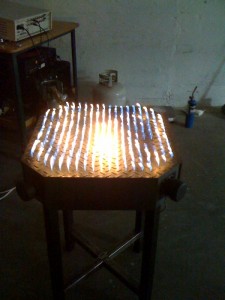
I’ve posted a profile of the various projects that I’ve worked on over the past few years on the web, mainly for graduate school applications, but also for the enjoyment of anyone who wants to know more about what I’ve been up to. There are four main categories: Design, Robotics, Programming, and a miscellaneous section. Each section has a few projects and each project has a short description.

Aside from the projects, the title image on the front page is an up-to-date indication of the current weather conditions here in Boston, including the current temperature in white.

Portfolio

December 2nd, 2007

A collection of projects completed during undergraduate studies at MIT. Please click a category below to learn more.

Design

Robotics

Programming

Writing

Resume

About

November 20th, 2007

Resume PDF - DOC

Cover Letter PDF - DOC

My name is Arthur Petron. Friends call me Darthur. I am currently a Senior at the Massachusetts institute of Technology. I study Mechanical Engineering with an emphasis on product design and manufactuing techniques. I work at the MIT Media Laboratory where I help to design new all-electric concept cars for urban environments. I also have worked to design enclosures for PCBs, mobile robotics, develop advanced ornithological monitoring systems, prototype 802.11x overlay TCP and UDP socket networks, analyze amino acid sequences to look for life-saving patterns, and just about anything that hinges slightly on mechanical engineering or computer programming.

pneumatic cannonI love to do anything that involves building things. Before coming to college I built a pneumatic cannon that could launch baseballs over 400 yards using only 40psi. I hold a provisional patent on a wheelchair device developed during my time with Product Design Processes, a class where teams work to solve real world problems with real clients. I also held a provisional patent on a device that converted elemental carbon and hydrogen into useable hydrocarbon fuel.

I am an Engineer:

cutaway view of a jaw clutch modeled in solidworks
I use all the resources I have avalable to me to develop new things for class or for fun. I worked to create an enclosure for the prototype-a boards of the Hundred Dollar Laptop. I’ve also worked with new composite technology to provide cheap and usable composites to everyone, not simply those with the money or knowhow.

I am a Designer:

Design is my passion. There are a few links to design projects in the ‘Design’ category and ‘Projects’ page on this site. I enjoy design from simple to complex, from balanced incense holders to mechanical speed indicators. I design mostly in my head, but enjoy sketching and CADing ideas to save for later use.

I am a Programmer:

Understanding information is the key to discovering new things. It is very difficult to be creative on a small knowledge base. I write programs to learn about things. It is fairly uncommon in mymaslab robotics competition experience for a mechanical engineer to know several programming languages (including the code that runs this website), but I find it useful in everyday life, and would think it prudent for programming to be taught in grade school.

I am a Teacher:

During the Independant Activites Period, held over the month of January at MIT each year, I am the part of the mechanical staff and help with teaching staff for a class called MASLAB. I have also been an undergradutate teaching advisor for a class called Design and Manufacturing I.

I am a Photographer:

I am an active photographer for The Tech - MIT’s student newspaper, but I really enjoy taking photographs just for fun. It’s a great way to express visually ideas that one is attempting to purvey to others. It’s also fun to show people what you’ve been up to.

Projects

November 20th, 2007

    Factors Affecting Creativity in the Product Design Industry
    Too often is creativity use simply as a buzzword without considering its deep philisophical underpinnings. The individuals behind todays coolest products are required to have a very specific skill set: the creativity of an artist with the analytical skills of an engineer. Of these two skills, creativity is still a topic that is largely misunderstood. What factors hinder creativity in this field? What factors help it flourish?

Old Projects:

    Enhanced Wind Turbine
    The idea of hooking 40,000 volts up to an airfoil doesn’t seem like it would do a whole lot, but with certain configurations, the electrical potential energy can be dissociated into the air around the airfoil, causing it to have intresting effects on the air flowing past. The result is increased boundary layer adhesion, which basically makes the airfoil more efficient. For more details on this project, please review the full report by clicking the title.
    Forced Hydrocarbon Formation
    Hydrocarbons, the stuff that makes up our plastics and polymers — and more importantly our fuels — are made of hydrogen and carbon mixed together in different ways. If one takes hydrogen and carbon, puts them in a jar and shakes them together, he ought to be able to get different permutations of hydrocarbons similar to what is found when drilling for oil. This project aims to investigate just that. Solid carbon is gassified through ionization in a 99% hydrogen atmosphere and the two are allowed to react. The most interesting thing about the process is the fact that the ionization requires a powerful electric arc to work — something that generally causes hydrogen to explode. Fortunately it only does so in the presence of an oxydizer (like the oxygen in air).

The Search for the Missing Manufacturing Industry

April 29th, 2007

At the time when I grew up in the quiet town of York, Pennsylvania, the manufacturing industry still employed a large share of the area’s workers, but the once premiere industry now suffers steady decline. By the time I headed off to college I had been in contact with enough disgruntled, jobless production line workers to last a lifetime and I knew this trend would continue. York is not alone. All over the country manufacturing jobs are disappearing. According to the Bureau of Labor Statistics, in 1950 the manufacturing industry contributed close to a third of the gross domestic product in the US, but today this number is quickly falling past ten percent, being replaced by the service industry.

Read the rest of this entry »

Experiments in Failure

April 23rd, 2007

A friend once told me that MIT, unlike other colleges such as Harvard, sets its students up to be accepting of failure. Whether intentional or not, classes are always difficult and the workload is very high. It is extremely difficult to achieve straight A’s throughout your entire MIT career, and to some, a B is failure. Yet even after the failure, MIT asks you to perform just as well or better on the next test, problem set, or final. I think MIT’s reason for doing this is neither to produce better engineers – in the sense of more capable – or to bring students down to earth – which it tends to do anyway – but to force students to learn to get right back into the fray when failure strikes. I think the biggest lesson learned from the ‘forced failure’ experience here is to go down kicking and come back up with the past behind you. Lessons from the failure are remembered, but not dwelt upon. You don’t get a chance to sit down and take a break. This is an extremely useful habit to foster, especially since many students are used to constant success they experienced in grade school before they came to MIT. In my case, grade school did not offer a laminar stream of success. Instead, there was some turbulence along the way that forced me to learn to fight on after failure a bit early.

Read the rest of this entry »

No more adventure stories

April 5th, 2007

A not so long time ago it was below freezing for more than a week here in Boston. At the time, this meant little more to me than dressing warmly and hoping that someday soon it would snow. I would spend my mornings checking the weather report and satellite images for any hint that there might be snow that day. After days of anxious waiting, snow finally came at the end of the frigid week, and it was an exciting day, but then, as the evening approached, to my horror, I watched out the window as the snow turned to sleet, and the sleet turned to freezing rain. Wonderful. The rain coated and stuck to everything and then froze completely solid. The snow turned to useless concrete where it wasn’t already shiny with ice. Even as a fairly stable person, walking to class became a chore, and at that point in time I just wanted the muck to melt. But then I remembered something. I own ice skates.

Read the rest of this entry »

Design Drawings

March 14th, 2007

In 2.00B “Solving Real Problems,” we are working towards helping out the Massachusetts based Food Project to build a new composter for one of their sites located in Dorchester, MA. For more information on the project and other project for 2.00B, visit the course website.

Background and description:

The Food Project is a nationally recognized youth development organization that manages 2 acres of urban and suburban farms in and around the city of Boston. The organization’s mission is to create a thoughtful and productive community of youth and adults from diverse backgrounds who work together to build a sustainable food system. On their four sites in Dorchester and Roxbury, they grow 15,000lbs of vegetables each year that are sold at a local low-income farmer’s market and donated to Rosie’s Place and Community Servings.

The Food Project needs to increase the amount of compost that they produce on their land, to improve the quality of their vegetables and minimize lead-contamination issues common in urban settings. The organization receives donations of compost from the city, but they do not receive enough, and this compost is not as high quality as the compost they make themselves.

The Food Project produces a lot of organic waste in the form of unusable vegetable matter (stalks, roots, cracked and damaged vegetables that cannot be sold or donated. They also pick up 2-4 trash barrels of food waste each week from Haley House Café, a neighborhood bakery, which they incorporate into the compost piles.

The Food Project would like help developing a composting system that would break down materials more quickly. A better composting system would save $1000/year and allow them to produce higher quality vegetables for the neighborhood shelters they serve.

Parameters:

  • The site is not fenced. They don’t have a lot of problems with vandalism and leave things like crates and other materials out in the open, but whatever is built should be durable and safe.
  • They don’t have an electrical power source on the land.
  • Labor is another issue. During the summer months, they have a large number of volunteers working with them throughout the week. In other seasons, we have less help and turning the compost piles takes a lot of time! Any systems that could minimize this activity would be beneficial
  • The system should not require a lot of space
  • The system should minimize the smell of the composting material, as their neighbors have started to voice concerns about smells from the compost pile since they began picking up food waste from Haley House

An initial design for the composter:

Click an image to see a larger version!

What have I been doing with my time?

March 6th, 2007

I’m busy, too busy to think about anything in a linear fashion
sometimes, and I fall into a sort of whimsical scatterbrained frame of
mind that I feel defines my life here at MIT. Unfortunately with that
frame of mind come a lot of questions when I do finally get to sit back
and think clearly for a little while, and sometimes I get somewhat
uneasy with their answers.

What have I been doing with my time? Where does it all go? What can I
do to change things? I have no idea. It probably doesn’t help that I
cannot remember most of the things I have done even a few hours after
they’ve been done. What I do remember involves not sleeping because of
some crazy, inordinate amount of work. Everyone wants me to do
something for them more frequently than I’m willing to, and then I don’t
actually get done what I planned to, so what am I really doing?

I know I have some sort of plan somewhere, but I think I lost it. It’s
great to have a plan. I like plans. Usually the plan never goes as it
was intended to go and I think that’s the best part of a plan – planning
for things not to go as planned, planning for extra time and
interruptions in your plan, and planning for new plans that have the
same problems as the old ones. Unfortunately there’s never enough time
to follow all the plans through to completion. I had a plan to finish
my website a while ago, but now I am not really sure what the address
is. I think I’ll have to start over on that plan. Read the rest of this entry »

2.007 Webpage Resources

March 2nd, 2007

To get things onto your site:

Useful Sites to look at for example code:

Tutorials: